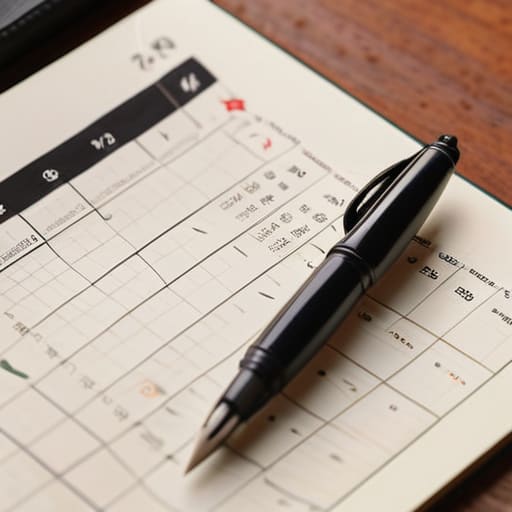
I spent most of my twenties in the weeds of tech logistics, watching brilliant people drown in a sea of “productivity hacks” and $20-a-month subscription tools that promised to save them. Most of them weren’t actually working; they were just performing work by meticulously color-coding digital calendars. We’ve been sold this lie that if we just find the right app, we’ll finally feel in control. But the truth is, you don’t need a more expensive dashboard; you need to stop running from the reality of your own schedule. Real time auditing isn’t about finding a shiny new way to track your tasks—it’s about the uncomfortable process of seeing exactly where your life is leaking away.
I’m not here to sell you on a new software suite or a complex framework that requires a week of onboarding. My goal is to give you a no-nonsense roadmap for looking at your hours with brutal, clinical honesty. I’ll show you how to strip away the digital noise and implement a system that actually works for your specific workflow. We’re going to focus on the substance over the spectacle, so you can stop chasing efficiency and start reclaiming the space you need for what actually matters.
Table of Contents
Identifying Time Leaks Without the Digital Noise

Most people think they need a complex, subscription-based dashboard to figure out where their day goes. They don’t. In my experience, the most effective way of identifying time leaks is to strip away the interface and get back to basics. I always suggest starting with simple daily activity logging. Grab a notebook—or even just a scrap of paper—and jot down what you actually did every hour. Don’t worry about making it pretty; just be honest. You’ll quickly see the gap between what you planned to do and the reality of those “quick” fifteen-minute email checks that somehow swallow your entire afternoon.
Once you have a few days of raw data, you can move into a more formal workday efficiency analysis. This isn’t about micromanaging yourself into burnout; it’s about seeing the patterns. Are you losing momentum because of constant context switching? Are you spending your peak energy hours on low-value administrative tasks? When you look at your log, look for the friction. The goal isn’t to fill every empty slot with more work, but to protect your focus from the distractions that serve no purpose.
A Simple Time Audit Template for Professionals

You don’t need a subscription to a complex SaaS platform to do this. In fact, I usually advise my clients to steer clear of them. A proper time audit template for professionals should be as lean as possible—think a simple spreadsheet or even a physical notebook. I prefer a grid format: columns for the time block, the specific task, and a “value” rating from 1 to 5. This isn’t about micro-managing every second; it’s about a high-level workday efficiency analysis that tells you whether you’re actually moving the needle or just spinning your wheels in meetings that could have been emails.
For one week, commit to daily activity logging every two or three hours. Don’t try to record every single blink or breath; just capture the major shifts in your focus. At the end of the week, look for the patterns. Are you losing two hours every afternoon to “administrative quick-fixes”? That’s a leak. By seeing your schedule laid out plainly, you can stop reacting to your inbox and start designing a day that actually supports your goals.
Five Rules for a Practical Audit (Without the Burnout)
- Stop over-complicating the tech. You don’t need a subscription to a high-end productivity suite to see where your day goes; a simple notebook or a basic spreadsheet is more than enough to capture the raw truth of your schedule.
- Look for the “context switching” tax. Pay close attention to how many times you jump from a deep task to a quick email check—those micro-interruptions are usually where your most valuable focus hours go to die.
- Be brutally honest about your “shadow work.” We all have those tasks—the endless Slack threads, the administrative minutiae, the “quick” calls—that don’t show up on a formal calendar but eat up half our afternoon.
- Audit your energy, not just your hours. It’s not enough to know you spent two hours on a report; you need to note if you were actually sharp or if you were just staring at the screen in a mid-afternoon fog.
- Focus on patterns, not single outliers. One bad Tuesday isn’t a trend, but if you notice every Thursday afternoon is a wash, you’ve found a systemic leak that needs a structural fix, not just a better to-do list.
Cutting Through the Noise: Three Rules for Staying Grounded
Stop looking for a magic app to solve your schedule; a simple notebook or a basic spreadsheet is more than enough to see where your time is actually going.
Focus on the leaks, not the perfection; your goal isn’t to account for every single minute, but to identify the big, recurring blocks that are draining your energy.
Use your data to protect your margins; once you see where the time is leaking, use that knowledge to set harder boundaries around your deep work.
## The Truth About Your Calendar
Most people don’t have a time management problem; they have a visibility problem. You can’t fix a leak in a system you haven’t actually mapped out, so stop guessing where your day went and start looking at the cold, hard data of your own actions.
Emmett Kowalski
Reclaiming Your Schedule

At the end of the day, a time audit isn’t about becoming a robot or squeezing every last drop of “output” out of your afternoon. It’s about visibility. By stripping away the digital clutter and looking at where your hours are actually leaking, you move from being reactive to being intentional. We’ve covered how to spot those leaks without drowning in new software, and I’ve given you the template to start tracking your reality rather than your aspirations. Remember, the goal isn’t to fill every gap in your calendar; it’s to identify the friction so you can finally stop fighting your own schedule and start managing it.
I know how easy it is to fall back into the trap of “productivity porn”—that endless cycle of searching for the perfect app that will magically fix your life. It won’t. The real magic happens in the quiet, manual work of looking at your life and deciding what deserves your energy. Use this data to build a life that feels sustainable, not just one that looks efficient on a spreadsheet. Stop chasing the noise and start protecting your focus. You aren’t just managing tasks; you are curating your most valuable resource: your time.
Frequently Asked Questions
How do I know if I'm being honest with myself during the audit, or if I'm just subconsciously making my "distractions" look like "work"?
That’s the million-dollar question. We’re all experts at lying to ourselves. I call it “productive procrastination”—spending three hours tweaking a spreadsheet instead of making that difficult client call. To catch yourself, look for the “busy work” trap. If a task feels like you’re just rearranging furniture rather than building the house, it’s a leak. If you can’t link an activity directly to a core objective, call it what it is: a distraction.
Is it worth doing this every single week, or will I just burn out from the constant tracking?
Look, if you try to track every minute every single week, you will burn out. That’s just more digital noise. I don’t recommend constant surveillance; that’s not productivity, it’s neurosis. Instead, treat it like a quarterly tune-up or a monthly deep dive. Audit when things feel chaotic or when you realize you’ve hit a wall. Use the data to fix the system, then get back to the actual work.
Once I actually see where all my time is leaking, how do I fix the habits without feeling like I'm micromanaging my entire life?
Don’t try to overhaul your entire existence overnight; that’s a recipe for burnout. Instead, pick one recurring leak you identified and apply a single constraint. If social media is the culprit, move the app off your home screen. If meetings are bleeding into deep work, block out two hours of “no-fly zone” time on your calendar. Fix one friction point at a time. You’re building a system, not policing a prisoner.