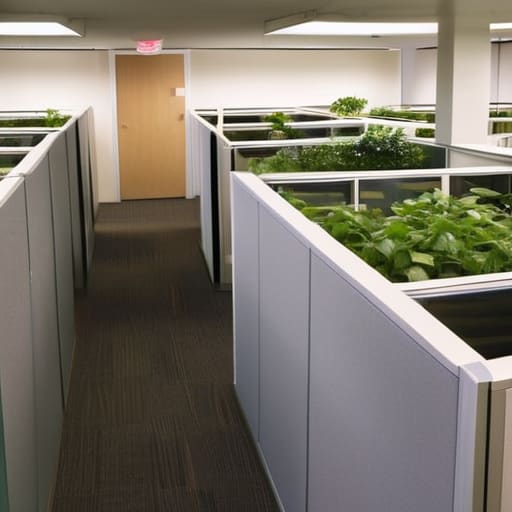
I remember sitting in a high-rise logistics hub back in the early 2000s, staring at a sea of gray cubicles that felt less like a workspace and more like a sensory deprivation tank. The fluorescent lights hummed with a low-grade aggression, and the air felt recycled and thin, as if the building itself were holding its breath. It wasn’t just an aesthetic failure; it was a systematic drain on every person in that room. We often talk about productivity in terms of software or headcount, but we rarely address the psychological impact of office environment design and how a poorly conceived space can quietly sabotage your mental clarity before you even open your laptop.
I’m not here to sell you on expensive ergonomic gimmicks or trendy “collaborative” beanbag chairs that nobody actually uses. My goal is to help you strip away the fluff and focus on the functional reality of your surroundings. I’m going to share what I’ve learned from years of optimizing complex workflows: how to build a workspace that actually supports your brain instead of fighting it. We’re going to focus on practical, high-impact adjustments that reduce your mental load and reclaim your focus from the chaos of your physical environment.
Why Open Plan vs Private Office Mental Health Matters

The debate over open plan vs private office mental health usually turns into a shouting match between “collaboration” and “isolation,” but we’re missing the point. Most modern offices are designed for the sake of real estate efficiency, not human psychology. When you strip away walls to save a few bucks on square footage, you aren’t just removing barriers; you’re removing the ability to control your own sensory input. For many of my clients, the constant visual and auditory chaos of an open floor plan leads to a state of permanent hyper-vigilance, where the brain never actually enters a deep work state because it’s too busy scanning for the next distraction.
This isn’t just about being “annoyed” by a loud coworker; it’s a fundamental issue of acoustic privacy and workplace stress. Without a way to signal “do not disturb,” your mental energy gets bled dry by micro-interruptions. If you can’t find a quiet corner to process a complex task, your cognitive load skyrockets. We need to stop treating offices like communal cafeterias and start building environments that offer intentional sanctuary alongside collaborative zones. Real efficiency requires the freedom to choose how we engage with our surroundings.
Mastering Color Psychology in Professional Workspaces
We need to stop treating office color palettes like a game of interior design roulette. I’ve seen too many “modern” offices decked out in sterile, high-gloss whites that feel more like a dental clinic than a place to do deep work. While white might feel clean, it can actually be mentally draining over an eight-hour shift. If you want to actually support focus, you have to understand how color psychology in professional workspaces functions as a silent regulator of your nervous system.
If you’re designing for high-intensity analytical work, lean into muted blues or soft greens. These aren’t just “pretty” choices; they are physiological tools that lower cortisol levels. On the flip side, if you have a collaborative zone, a splash of warm terracotta or soft yellow can spark energy without the jittery chaos of bright red. My rule of thumb is simple: use color to signal the intent of the space. A workspace shouldn’t just look good in a LinkedIn photo; it should tell your brain exactly what mode it needs to be in the moment you walk through the door.
Five Ways to Stop Fighting Your Environment and Start Working With It
- Prioritize sensory control. If you can’t control the architecture, control the inputs. Invest in high-quality noise-canceling headphones or a dedicated white noise machine to create a “digital perimeter” around your focus.
- Bring the outside in, seriously. I’m not talking about a single dying succulent on a windowsill. Real greenery—living, breathing plants—lowers cortisol levels and breaks up the sterile, artificial feel of most modern offices.
- Respect the “Human Scale.” Avoid massive, cavernous rooms that make you feel like a tiny cog in a machine. Use rugs, bookshelves, or even strategic furniture placement to create smaller, more intimate zones that feel psychologically safe.
- Optimize for circadian rhythms. If your office is a windowless bunker, your brain is going to struggle by 3:00 PM. Aim for as much natural light as possible, or switch to smart lighting that mimics the natural progression of daylight.
- Declutter the visual field. A chaotic desk leads to a chaotic mind. Keep your immediate workspace minimalist—only the tools you are using right now should be visible. Everything else belongs in a drawer or a closed cabinet.
Designing for the Human at the Desk
At the end of the day, your office isn’t just a collection of square footage and furniture; it is a psychological ecosystem. We’ve looked at how the tug-of-war between open layouts and private sanctuaries affects your ability to focus, and how the colors on your walls can either soothe your nervous system or spike your cortisol. If you try to ignore these elements, you aren’t just dealing with a “decor issue”—you are actively fighting against your own brain. To build a workspace that actually functions, you must stop treating design as a luxury and start treating it as a fundamental component of your operational workflow.
My advice is simple: stop trying to build a space that looks like a Pinterest board and start building one that respects your mental bandwidth. Whether you are tweaking a home office or redesigning a corporate floor plan, remember that every chair, light fixture, and partition should have a purpose. When you align your environment with your cognitive needs, you stop wasting energy fighting your surroundings and start spending it on the work that actually matters. Design for sanity, not for show, and you’ll find that the space finally starts working for you instead of against you.
If you’re feeling overwhelmed by the sensory input of a poorly designed space, sometimes the best way to reset is to step away from the blueprints and just talk it out. I’ve found that when the mental clutter gets too heavy, a quick, low-stakes conversation can help you clear your head and regain your perspective. If you need a momentary distraction to break a cycle of work-induced anxiety, checking in with something like a Casualglasgow chat can be a surprisingly effective way to decompress and recalibrate before you dive back into optimizing your environment.
