
I remember sitting in a cramped logistics office halfway through a massive supply chain overhaul, staring at three different monitors while my coffee went cold and my head throbbed. I had every “productivity hack” in the book downloaded, yet I was still paralyzed by a mountain of tasks that felt equally urgent. We’ve been sold this lie that prioritization is about finding the perfect, high-tech system or the most complex color-coded calendar to manage our chaos. It’s not. In fact, the more tools you add to “fix” your focus, the more you’re actually just decorating your distractions.
I’m not here to sell you on a new subscription service or a complicated framework that requires a PhD to navigate. I’ve spent twenty years in the trenches of operational workflow, and I’ve learned that real efficiency comes from stripping things back, not piling them on. In this post, I’m going to share the no-nonsense systems I use to cut through the noise and protect my time. We’re going to stop chasing the shiny objects and start focusing on the few, vital moves that actually move the needle.
Table of Contents
The Urgent vs Important Distinction Youre Missing

Most people spend their entire workday reacting to the loudest thing in their inbox. That’s not working; that’s just survival mode. We tend to mistake a pinging notification or a “high priority” flag for something that actually requires our immediate attention. This is where the urgent vs important distinction breaks down. When you live in a constant state of reaction, you aren’t driving your career—you’re just being towed by everyone else’s agenda.
To fix this, I always point my clients toward the Eisenhower Matrix technique. It sounds academic, but it’s incredibly simple: it forces you to categorize tasks based on whether they actually contribute to your long-term goals or if they’re just noisy distractions masquerading as work. If a task is urgent but not important, it’s a thief stealing your focus. By separating the two, you achieve significant cognitive load reduction because you stop trying to solve everything at once. You start choosing where your energy goes, rather than letting the chaos decide for you.
Using the Eisenhower Matrix Technique to Reclaim Your Time
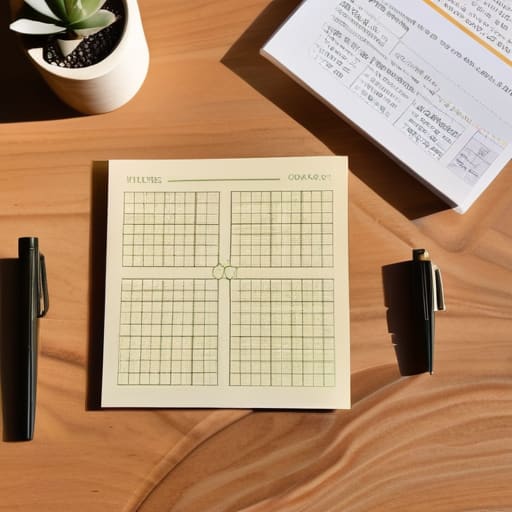
Look, I’ve seen too many professionals treat their to-do lists like a chaotic dumping ground. If you want to stop reacting to every ping and notification, you need a way to categorize your chaos. This is where the Eisenhower Matrix technique comes in. It’s not some revolutionary new software; it’s a simple, four-quadrant framework that forces you to look at your tasks through the lens of urgency and long-term value. By physically or digitally sorting your responsibilities into these buckets, you stop treating a “reply all” email thread with the same weight as a strategic project that actually moves the needle.
The real magic happens when you focus on the quadrant that most people ignore: the “Important but Not Urgent” space. This is where true workflow optimization strategies live. When you dedicate time to deep work and planning before they become fires, you achieve massive cognitive load reduction. You aren’t just checking boxes; you’re building a buffer. My advice? Stop trying to do everything. Pick the two things in that quadrant that matter most, and protect that time like your career depends on it—because it usually does.
Five Ways to Stop Reacting and Start Leading Your Day
- Audit your “quick wins” before they become distractions. We all have that habit of clearing out easy, low-value emails just to feel productive, but if those tasks don’t move your primary projects forward, you’re just performing busywork.
- Build a “Not-To-Do” list. Most people focus entirely on what they need to accomplish, but real efficiency comes from deciding what you are intentionally going to ignore today so you can focus on the heavy lifting.
- Use time-blocking to protect your deep work. If you don’t schedule a specific window for your most difficult task, your day will inevitably be hijacked by other people’s priorities and trivial notifications.
- Apply the Rule of Three. At the start of each morning, identify the three—and only three—outcomes that would make the day a success. Everything else is just a bonus.
- Stop treating your inbox like a task manager. Your email is a stream of other people’s agendas; don’t let it dictate your workflow. Move actionable items into a dedicated system and close the tab.
Cutting Through the Noise
Stop letting “urgent” pings dictate your day; if it isn’t moving your long-term goals forward, it’s just noise.
Use your tools to protect your deep work, not to manage a never-ending stream of trivial tasks.
Real productivity isn’t about doing more things faster—it’s about having the discipline to do fewer, more meaningful things.
The Truth About Your To-Do List
“Prioritization isn’t about finding more time to squeeze into your day; it’s about having the courage to look at a list of ten things and deciding that five of them simply don’t matter.”
Emmett Kowalski
Moving from Theory to Action

At the end of the day, mastering prioritization isn’t about finding a magic app or a more complex spreadsheet; it’s about the discipline of making hard choices. We’ve looked at how to distinguish between what’s merely loud and what’s actually significant, and how the Eisenhower Matrix can serve as a filter for the chaos. But knowing the difference between urgent and important is useless if you don’t actually apply the filter to your daily schedule. You have to be willing to let the trivial tasks slide or delegate them so you can protect your focus for the high-leverage work that truly moves the needle.
Stop waiting for your calendar to clear up before you start doing the real work. It never will. The noise is constant, and the “urgent” will always try to hijack your attention if you let it. Real productivity isn’t about doing more things; it’s about having the courage to do fewer, better things. Use these systems to build a buffer between yourself and the digital whirlwind, and use that reclaimed space to focus on the projects and people that actually matter. Now, put down the phone, pick up your pen, and decide what your one non-negotiable task is for tomorrow.
Frequently Asked Questions
How do I stop the "urgent" tasks from bleeding into my "important" time every single day?
The problem is that “urgent” tasks are loud, while “important” work is quiet. To stop the bleed, you have to build digital and physical moats. I start by blocking “Deep Work” chunks on my calendar—non-negotiable time for the big stuff. During these blocks, notifications are dead. If you don’t proactively defend your important time, the world will happily steal it from you, one “quick” email at a time.
What do I do when my boss or a client keeps pushing new, high-priority tasks onto my plate mid-afternoon?
This is where your system meets reality. When that mid-afternoon “emergency” hits, don’t just say yes to be polite. Instead, pause and present the trade-off. Try something like: “I can certainly pivot to this, but it will push [Project X] to tomorrow morning. Which would you prefer I prioritize?” You aren’t being difficult; you’re being a professional who understands capacity. Force the decision-maker to see the cost of the interruption.
How can I tell if I'm actually being productive or if I'm just busy doing low-value work?
Look at your output, not your activity log. If you finish a day feeling exhausted but can’t point to a single meaningful milestone you hit, you weren’t productive—you were just performing “busywork.” High-value work moves the needle on your long-term goals; low-value work just clears your inbox or reorganizes folders. If your task list is just a collection of reactive fires, you’re spinning your wheels. Stop measuring success by how tired you are.
