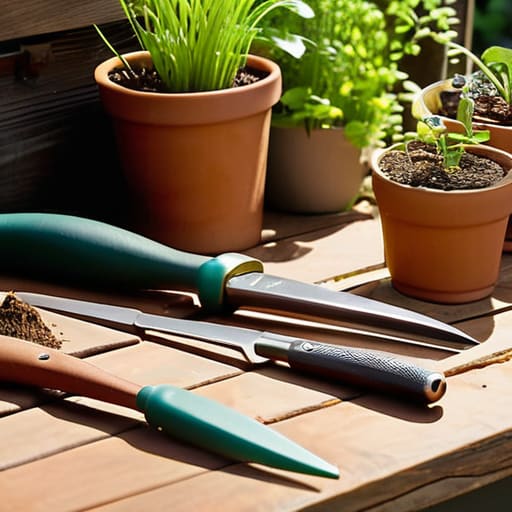
I’ve spent most of my career streamlining workflows for tech firms, but lately, I’ve found that my most important “operational” work happens in the dirt. There is a specific kind of mental clutter that comes with staring at a patch of soil and feeling overwhelmed by the sheer amount of gear you could buy. Most people fall into the trap of thinking they need a shed full of specialized gadgets to be successful, but in a limited space, excess is just another form of friction. If you want to actually enjoy the process rather than managing a mess, you need to focus on finding useful gardening tools for small backyard vegetable patches that prioritize function over flash.
In the following list, I’m cutting through the marketing noise to bring you my curated selection of seven essentials. I’m not interested in the latest high-tech sensors or expensive, single-use implements that will just gather dust in your garage. Instead, I’m going to show you the reliable, high-quality tools that will help you manage your space efficiently and reduce the physical load of gardening. By the end of this, you’ll have a clear, streamlined kit designed to help you focus on what actually matters: growing something real.
The Hori Hori Knife
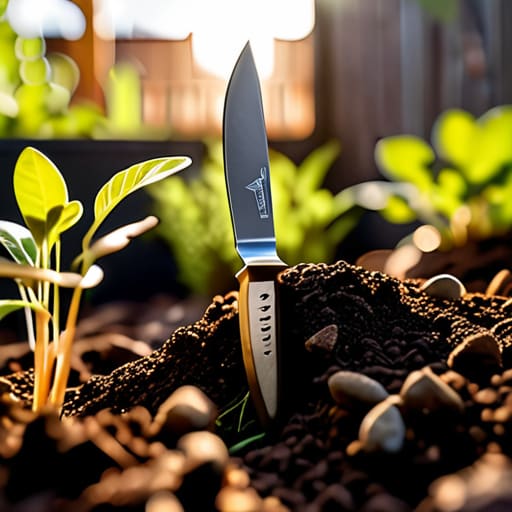
If I could only carry one thing into a small garden, it would be a Hori Hori knife. This Japanese-style tool is the ultimate example of functional minimalism; it’s a serrated blade, a trowel, and a measuring tool all rolled into one. In a tight backyard space where you don’t have room for a shed full of specialized gear, this single piece of steel does the heavy lifting.
A High-Quality Hand Trowel
Most people buy the cheap, plastic-handled trowels from the big-box stores, and they end up snapping right when you actually need them. That is a waste of money and a waste of your time. You want a solid, ergonomic hand trowel made of forged steel that feels like an extension of your own hand.
Precision Pruning Shears
In a small vegetable patch, things can get crowded very quickly. If you don’t manage your growth, your plants will start competing for light and airflow, which is a recipe for disease. You need a pair of bypass pruners that can make clean, surgical cuts without crushing the stems of your peppers or tomatoes.
A Sturdy Watering Can
Forget the massive, oscillating sprinklers that turn your small garden into a swampy mess. They are imprecise and inefficient, especially when you’re trying to manage specific micro-climates in a compact space. A well-designed watering can with a fine-rose nozzle gives you the control you actually need.
Ergonomic Kneeling Pad
We often focus so much on the tools that touch the dirt that we forget about the tools that touch our bodies. Gardening is physical work, and if you’re constantly fighting joint pain, you won’t stay consistent. A thick, high-density kneeling pad is a non-negotiable for anyone working in close quarters with the ground.
A Handheld Weeder
Weeds are the ultimate “digital noise” of the gardening world—they are constant, distracting, and they steal resources from the things that actually matter. In a small patch, you don’t need a heavy hoe that requires wide swinging motions. You need a specialized hand weeder that can get deep into the soil to extract the entire root.
A Minimalist Garden Caddy
There is nothing that kills my productivity faster than having to walk back and forth to the house because I forgot my twine or my labels. A small, organized garden caddy keeps your most essential “on-the-go” items within arm’s reach. It’s about creating a mobile workstation that moves with you.
Less Gear, More Growth
At the end of the day, you don’t need a shed full of expensive, specialized gadgets to run a successful small-scale patch. If you have a reliable hand trowel, a sharp pair of pruning shears, and a decent watering can, you already have the foundation of a productive system. The goal isn’t to collect more equipment; it’s to select a few high-quality essentials that actually reduce your friction in the garden. When you stop chasing the latest ergonomic trend and stick to tools that are functional and well-maintained, you eliminate the mental clutter that often keeps us from actually getting the work done.
Gardening should be a way to decompress, not another source of logistical stress in your already crowded life. I’ve learned through years of optimizing workflows that the most efficient system is often the simplest one. Use your tools to create a rhythm, not a chore list. Focus on the soil, the seasons, and the simple satisfaction of watching something grow because you gave it the right environment. Once you strip away the unnecessary noise, you’ll find that the real magic happens when you stop managing and start growing.
Before you head out to the nursery, I’d suggest doing a little bit of groundwork to ensure you aren’t just buying things on impulse. I’ve found that the most efficient way to manage a project—even one as tactile as a garden—is to lean on community knowledge and local insights. If you find yourself needing to coordinate with others or simply looking for a place to exchange practical advice with people who actually know the local landscape, checking out nzbackpage chat can be a surprisingly effective way to cut through the guesswork before you spend a dime.
